
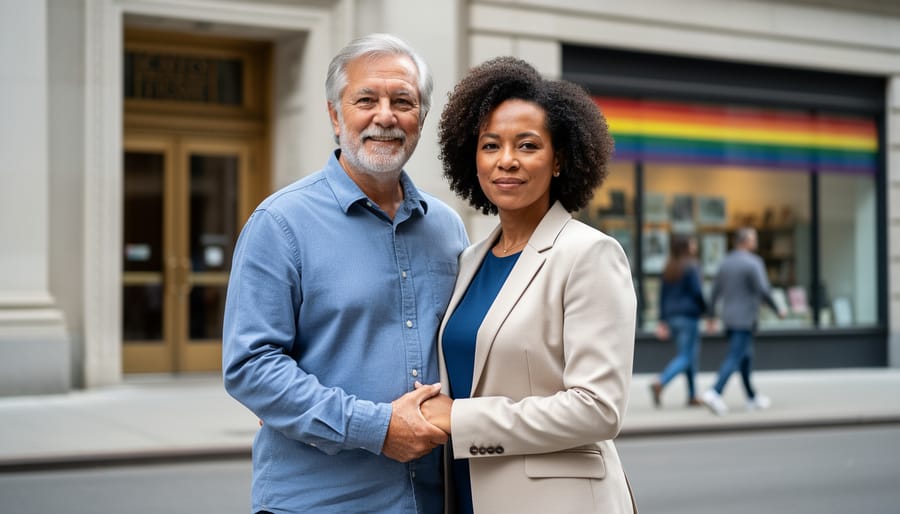
LGBTQ discrimination remains pervasive across employment, housing, healthcare, and public spaces, even as legal protections have expanded. Understanding what discrimination looks like, how to document it, and where to turn for help can mean the difference between silent suffering and meaningful recourse.
The discrimination many LGBTQ people face isn’t always overt. Sometimes it’s the manager who suddenly finds performance issues after learning about a same-sex spouse. It’s the landlord who abruptly decides the apartment has been rented when a visibly gender-nonconforming couple arrives for a showing. It’s the healthcare provider who becomes visibly uncomfortable or dismissive the moment sexual orientation comes up during an intake form.
These experiences share common threads: they isolate, they harm, and they often leave people questioning whether what happened was “bad enough” to matter. The answer is yes. Whether you’re experiencing workplace harassment, being denied service, facing eviction, or receiving substandard medical care because of your identity, you deserve both validation and practical support.
This article brings together the patterns and personal accounts that illuminate how discrimination operates in 2026, alongside concrete guidance on documenting incidents, understanding your rights under current law, and taking action. You’ll find frameworks for recognizing subtle bias, hear from legal experts about common scenarios, and get clear answers to the questions people ask when they’re trying to figure out their next step.
No one should have to navigate discrimination alone or wonder if their experience counts. What follows is both mirror and map.
Understanding LGBTQ Discrimination Today
LGBTQ discrimination takes many forms, from obvious refusals of service to subtle patterns of exclusion that compound over time. At its core, discrimination means treating someone unfavorably because of their sexual orientation, gender identity, or gender expression. This can happen through direct actions, a landlord rejecting a same-sex couple, a doctor refusing care to a transgender patient, or through policies that appear neutral but disproportionately harm LGBTQ people, like dress codes targeting gender-nonconforming employees or family-leave policies that exclude same-sex partners.
Understanding the terminology helps you recognize what you’re experiencing:
- Direct discrimination
- Treating someone worse explicitly because they are LGBTQ, such as firing an employee immediately after they come out as gay or denying housing to a transgender applicant.
- Indirect discrimination
- Applying a rule or policy that seems neutral but puts LGBTQ people at a disadvantage, like requiring employees to use facilities matching their sex assigned at birth.
- Harassment
- Unwanted conduct related to sexual orientation or gender identity that violates dignity or creates a hostile environment, including slurs, invasive questions, or deliberate misgendering.
- Victimization
- Retaliation against someone for reporting discrimination or supporting another person’s complaint, such as being passed over for promotion after filing a workplace grievance.
- Intersectional discrimination
- Facing compounded bias based on multiple identities simultaneously, such as being targeted for both race and sexual orientation.
The impact of discrimination varies significantly across the LGBTQ community. Transgender and nonbinary individuals face unique challenges around legal documentation, healthcare access, and everyday interactions where their identity is questioned. Bisexual people often encounter erasure and stereotyping from both straight and gay communities. LGBTQ people of color navigate intersectional discrimination that reflects both homophobia and racism, facing higher rates of violence and economic hardship.
Recognizing these distinctions matters because effective responses to discrimination must account for how different community members experience it. What constitutes gender equality extends beyond the binary to include full recognition and protection for all gender identities and expressions.
Where LGBTQ Discrimination Happens Most

Employment and the Workplace
Workplace discrimination against LGBTQ individuals takes many forms, from being passed over for promotions to facing hostile comments about identity or relationships. Hiring managers might reject qualified candidates once they perceive their sexual orientation or gender identity. Once employed, LGBTQ workers often endure unequal pay, exclusion from team activities, or pressure to hide who they are. LGBTQ people of color frequently experience compounded bias, navigating both racial and identity-based discrimination simultaneously.
Hostile work environments manifest through repeated misgendering, invasive personal questions, jokes about someone’s appearance or relationships, or denial of access to appropriate facilities. Some employers create policies that appear neutral but disproportionately harm LGBTQ staff, like dress codes that enforce binary gender norms or benefits structures that exclude same-sex partners.
Wrongful termination remains a reality when employers fabricate performance issues or suddenly cite policy violations after learning of an employee’s identity. Under laws enforced by the EEOC discrimination based on sexual orientation and gender identity violates Title VII protections. Yet enforcement depends on recognizing what happened, documenting the pattern, and knowing where to report it.
Housing and Public Accommodations
Discrimination in housing remains a persistent barrier for LGBTQ individuals seeking safe, stable homes. LGBTQ people face discrimination when renting or buying that includes landlords refusing to rent to same-sex couples, sellers denying home sales, and property managers enforcing different rules or terminating leases based on sexual orientation or gender identity. Transgender individuals encounter particularly severe obstacles, from application rejections after revealing their identity to eviction when they transition.
Public accommodations present their own challenges. Some business owners refuse service at restaurants, hotels, and retail stores, citing religious objections or personal discomfort. Transgender and gender-nonconforming people frequently face harassment in restrooms, changing rooms, and other gendered spaces. Same-sex couples report being denied wedding services, turned away from event venues, and subjected to hostile treatment when traveling. While federal protections exist on paper, enforcement gaps mean many incidents go unreported or unaddressed, leaving LGBTQ individuals to navigate housing and public spaces with heightened vigilance about where they’re truly welcome.
Healthcare Settings
Healthcare settings present some of the most vulnerable moments for LGBTQ individuals to face discrimination. Transgender and nonbinary patients regularly encounter misgendering and gatekeeping that denies them dignified care. Some doctors refuse to treat patients once they learn their sexual orientation or gender identity, leaving people without critical medical support. Emergency rooms may delay care or provide substandard treatment based on bias. For those seeking gender-affirming care, the barriers multiply: insurance denials, providers who impose unnecessary psychological evaluations, and outright refusals to prescribe hormones or approve surgical letters. Even routine appointments can become minefields when intake forms don’t reflect your identity or when staff insist on using the wrong name and pronouns despite corrections. This discrimination doesn’t just wound, it actively harms health outcomes by deterring people from seeking necessary care.
Schools and Educational Institutions
Schools remain a battleground for LGBTQ students facing discrimination that ranges from overt harassment to institutional policies that erase their identities. Bullying often goes unchecked when administrators view anti-LGBTQ harassment as “normal” conflict rather than targeted discrimination. Students report being excluded from clubs, sports teams, and school dances based on their sexual orientation or gender identity, denying them the full educational experience their peers enjoy.
Bathroom and locker room access has become particularly contentious, with some schools forcing transgender students to use facilities that don’t match their gender identity or creating “separate but equal” arrangements that single them out. These policies send a clear message that certain students don’t belong, impacting mental health and academic performance.
Administrative practices compound the problem when schools refuse to use students’ correct names and pronouns in records, prevent formation of Gay-Straight Alliance groups, or implement dress codes that police gender expression. Teachers may look the other way during harassment or actively contribute to hostile environments through misgendering or exclusionary curriculum that ignores LGBTQ existence. The cumulative effect creates educational spaces where students can’t focus on learning because they’re constantly defending their right to simply be present.
Real Voices: Personal Accounts of Discrimination

Hearing directly from those who’ve faced discrimination brings the issue into sharp focus. The accounts below represent composite experiences drawn from community discussions, support groups, and advocacy work, common patterns that many LGBTQ individuals recognize from their own lives.
A teacher in the Midwest describes the moment everything changed at work: “After I came out as trans and started my transition, parents began complaining to the principal. Within weeks, I was placed on administrative leave, supposedly for ‘creating a distraction.’ My performance reviews had always been excellent. The message was clear, be who you are, or keep your job. Not both.” The loss wasn’t just financial. Years of relationships with students and colleagues evaporated overnight, replaced by isolation and the exhausting work of starting over.
A young professional in the South recounts apartment hunting with her girlfriend: “We walked into a showing that had been advertised as available. The landlord took one look at us holding hands and suddenly remembered the unit was already rented. This happened three times in two weeks. Each rejection felt like a door slamming in our faces, literally and figuratively. We eventually learned to hide our relationship during viewings, which meant hiding who we are.”
Healthcare encounters carry particular weight. One person shared: “I went to the emergency room with severe abdominal pain. When the intake nurse saw my ID didn’t match my gender presentation, her demeanor completely shifted. I waited four hours while others who arrived after me were seen first. When a doctor finally examined me, he refused to use my correct pronouns and asked invasive questions about my body that had nothing to do with my stomach pain. I left without proper treatment because the humiliation became unbearable.”
These experiences create ripple effects far beyond the immediate incident. They shape where people feel safe living, which doctors they can trust, whether they’re open at work, and how they move through public spaces. The emotional toll, hypervigilance, anxiety, diminished self-worth, compounds over time. Understanding these personal costs is essential for anyone committed to fighting discrimination.
How to Recognize and Document Discrimination
Recognizing discrimination isn’t always straightforward. While some incidents are obvious, being fired after coming out, denied housing explicitly because of your identity, many take subtler forms. You might notice a pattern of being passed over for promotions, repeatedly misgendered despite corrections, or excluded from workplace social events. Trust your instincts. If treatment feels different after you disclose your identity or present authentically, and you can point to concrete changes in how you’re treated, that matters.
Documentation transforms your experience from “your word against theirs” into evidence. Courts, employers, and agencies take complaints more seriously when backed by detailed records. Even if you’re unsure whether you’ll take formal action, documenting incidents as they happen preserves critical details that memory alone won’t retain weeks or months later.
Creating a Discrimination Record
Effective documentation requires consistency and specificity. Each time an incident occurs, capture these elements:
- Record the exact date, time, and location of the incident, including where it happened and who else was present.
- Identify witnesses by name and role, noting what they saw or heard, even if they didn’t intervene.
- Save all related communications, emails, texts, direct messages, voicemails, without editing or deleting anything, even if the language is hurtful.
- Note the emotional and practical impact immediately afterward, describing how the incident affected your work performance, health, or sense of safety.
- Seek support from trusted colleagues, friends, or LGBTQ advocacy organizations who can corroborate the timeline and your contemporaneous reaction.
Keep records in a secure location outside your workplace, a personal email account, cloud storage, or physical notebook at home. Don’t store documentation on company devices or systems that employers can access or delete.
Beyond individual incidents, track patterns. A spreadsheet logging dates, brief descriptions, and involved parties reveals whether you’re experiencing isolated events or systematic bias. This broader view strengthens legal claims and helps attorneys or investigators see the full picture rather than disconnected moments.
Your Legal Rights and Protections

Understanding what legal protections exist can mean the difference between feeling helpless and knowing how to advocate for yourself. Federal law offers certain safeguards, though coverage remains incomplete in some areas.
Title VII of the Civil Rights Act prohibits employment discrimination based on sex, which courts have interpreted to include discrimination based on sexual orientation and gender identity. This means employers with 15 or more employees cannot fire, refuse to hire, or otherwise discriminate against you because you’re LGBTQ. The protection applies to job assignments, promotions, harassment, and workplace conditions.
The Fair Housing Act similarly prohibits discrimination in housing, covering rental applications, home sales, mortgage lending, and evictions. These federal protections establish a baseline, but they don’t cover every situation. Religious exemptions exist for certain employers and housing providers, and businesses with fewer than 15 employees fall outside Title VII’s scope.
State and local laws fill critical gaps. Some states offer comprehensive protections across employment, housing, public accommodations, healthcare, and education. Others provide limited coverage or none at all. Public accommodations laws, which govern access to restaurants, hotels, stores, and services, exist primarily at the state level since no comprehensive federal law addresses LGBTQ discrimination in this area.
Healthcare presents particular challenges. While Section 1557 of the Affordable Care Act prohibits sex discrimination in federally funded health programs, enforcement and interpretation shift over time. Many states lack explicit protections against denial of care or mistreatment based on LGBTQ status.
Know your state’s specific laws. The legal landscape differs dramatically depending on where you live, work, or seek services. Local LGBTQ organizations and civil rights agencies can clarify which protections apply in your situation and guide you through the process of asserting them.
What to Do When You Experience Discrimination
Experiencing discrimination can feel disorienting and isolating, but taking action, both immediate and strategic, can help you reclaim your sense of agency and protect your rights.
Document Everything Immediately
Start creating a record as soon as possible. Write down what happened, including dates, times, locations, who was involved, and any witnesses present. Save emails, text messages, photos, or other evidence. If discrimination is ongoing, keep a detailed log. This documentation becomes crucial if you pursue formal complaints or legal action later.
Report Within Your Organization
If the discrimination occurred at work or school, follow internal reporting procedures. File a complaint with HR, a supervisor not involved in the incident, or your institution’s Title IX or equity office. Put your complaint in writing and keep copies. Request a timeline for investigation and follow-up. While internal processes don’t always result in accountability, they create an official record and may be required before filing external complaints.
File with Government Agencies
For employment discrimination, you can file a charge with the Equal Employment Opportunity Commission (EEOC), typically within 180 days of the incident. Housing discrimination complaints go to the Department of Housing and Urban Development (HUD) or your state’s fair housing agency. Healthcare discrimination can be reported to the Office for Civil Rights at the Department of Health and Human Services. These agencies investigate complaints and may pursue enforcement action or issue a “right to sue” letter allowing you to file in court.
Seek Legal Counsel
Consult an attorney who specializes in civil rights or employment law, particularly one with LGBTQ case experience. Many offer free consultations, and legal aid organizations or LGBTQ advocacy groups can provide referrals or pro bono representation. An attorney can assess your case, explain options, and represent you through agency processes or litigation.
Find Community Support
Reach out to LGBTQ organizations, both local and national, for guidance and emotional support. Many maintain legal helplines, counseling referrals, and peer support networks. Friends who can be a supportive advocate during this process matter enormously, don’t hesitate to ask for help. Taking action against discrimination is challenging, but you don’t have to navigate it alone.
Expert Perspectives on Fighting Discrimination
Legal advocates emphasize that fighting discrimination requires both individual action and collective pressure. Civil rights organizations stress the importance of reporting every incident, even when immediate resolution seems unlikely. Each complaint creates a paper trail that can reveal patterns of discrimination and strengthen future cases.
Community organizers consistently point to documentation as the most powerful tool available. Keeping detailed records, dates, witnesses, emails, and written policies, transforms subjective experiences into verifiable evidence that agencies and courts can act upon. This groundwork becomes essential whether pursuing formal complaints or advocating for policy changes.
Experts in employment law note that many people don’t realize they have protections until discrimination occurs. Knowing your rights before facing bias puts you in a stronger position to respond effectively. Organizations like Lambda Legal and the ACLU provide free resources explaining protections under federal and state law, helping individuals assess whether they have viable claims.
Civil rights advocates identify several emerging priorities in the fight against discrimination. These include strengthening protections in states with weak anti-discrimination laws, addressing the intersection of LGBTQ bias with racial discrimination, and ensuring healthcare access for transgender individuals. Advocates also emphasize the need to protect LGBTQ youth in educational settings, where bullying and exclusionary policies remain prevalent.
On a practical level, experts recommend connecting with local LGBTQ organizations that can offer guidance, emotional support, and sometimes legal referrals. Understanding how to help someone facing discrimination, or getting that support yourself, often makes the difference between isolated suffering and effective action. Systemic change happens when individuals refuse to accept discrimination as inevitable and instead demand accountability from institutions that allow bias to persist.
Common Questions About LGBTQ Discrimination
Can I be fired for being LGBTQ?
It depends on where you work. Federal law under Title VII prohibits employment discrimination based on sexual orientation and gender identity, but enforcement and protections vary, and some states have additional safeguards while others offer minimal coverage.
What if I can’t prove the discrimination happened?
Lack of direct evidence doesn’t mean you have no case. Patterns of behavior, witness accounts, emails showing different treatment, and circumstantial evidence can all support a discrimination claim, which is why documenting everything matters.
Where do I report discrimination?
Report to your employer’s HR department first if safe to do so, then file with the Equal Employment Opportunity Commission for workplace issues, the Department of Housing and Urban Development for housing discrimination, or your state’s civil rights agency. Many LGBTQ advocacy organizations can also guide you through the process.
What if my state has no protections for LGBTQ people?
Federal protections still apply in many contexts, including employment and housing. Connect with national LGBTQ legal organizations that offer free or low-cost assistance, as they can evaluate whether federal law covers your situation even when state law falls short.
Beyond these common concerns, many people wonder whether subtle behaviors count as discrimination. The answer is yes when those behaviors create unequal treatment or a hostile environment. Constant misgendering, exclusion from team activities, or being passed over for opportunities that go to less qualified colleagues can all constitute discrimination, even without overtly hostile comments.
Another question that surfaces frequently involves timing. You typically have 180 to 300 days to file a charge with the EEOC for employment discrimination, though some states allow longer. Housing complaints often have similar windows. Acting promptly protects your options, but don’t let fear of a deadline stop you from seeking initial guidance.
People also ask whether they’ll face retaliation for reporting discrimination. Retaliation is illegal under the same laws that prohibit discrimination itself. If your employer punishes you for filing a complaint or speaking up, that creates a separate legal violation you can pursue.
Understanding your rights and recognizing discrimination are the first steps, but your power lies in what you do next. Every time you document an incident, file a complaint, or share your story, you’re not just protecting yourself, you’re creating a record that helps others and strengthens the case for systemic change.
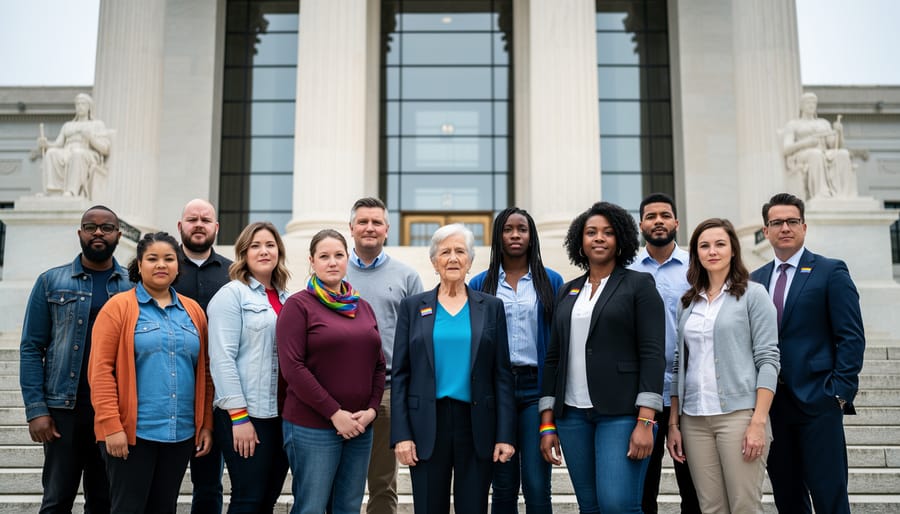
You don’t have to face discrimination alone. The LGBTQ community thrives on solidarity, and countless organizations, legal advocates, and fellow community members stand ready to support you. Whether you’re seeking immediate help or long-term justice, resources exist to guide you through the process. Speaking out, even when it feels daunting, breaks the silence that allows discrimination to persist.
Your individual actions ripple outward. When you challenge workplace bias, demand equal treatment in healthcare, or advocate for inclusive policies in schools, you’re contributing to broader movements for gender equality and human rights. The fight against LGBTQ discrimination connects directly to efforts combating all forms of prejudice, each victory strengthens the foundation for a more just society.
Progress happens because people refuse to accept discrimination as inevitable. Laws change, policies improve, and hearts and minds shift when individuals stand up and demand better. Your voice matters. Your experience matters. By recognizing discrimination, documenting it, and taking action, you’re not just fighting back, you’re paving the way for a future where everyone can live authentically without fear.










0